Born in Bologna in 1869, Cesare Candi was orphaned at fifteen years of age and entered as an apprentice in the workshop of Raffaele Fiorini, where his brother Oreste was working already. The two then moved to Genoa, being hired at a local plucked instrument factory. Cesare Candi's most frequent activity at the beginning of his career was therefore devoted to the making of mandolins and guitars, together with the creation of elaborate inlaid and decorated instruments, to which he devoted his talent in the decades to come as well. Candi focused more specifically on bowed-stringed instruments starting from the early years of the twentieth century, under the influence of Enrico Rocca and Eugenio Praga; Candi also later became the latter's successor as conservator of the famous "Cannone" by Giuseppe Guarneri del Gesù, left by Niccolò Paganini to the city of Genoa and which Candi would restore in preparation for the Stradivarian bicentenary.
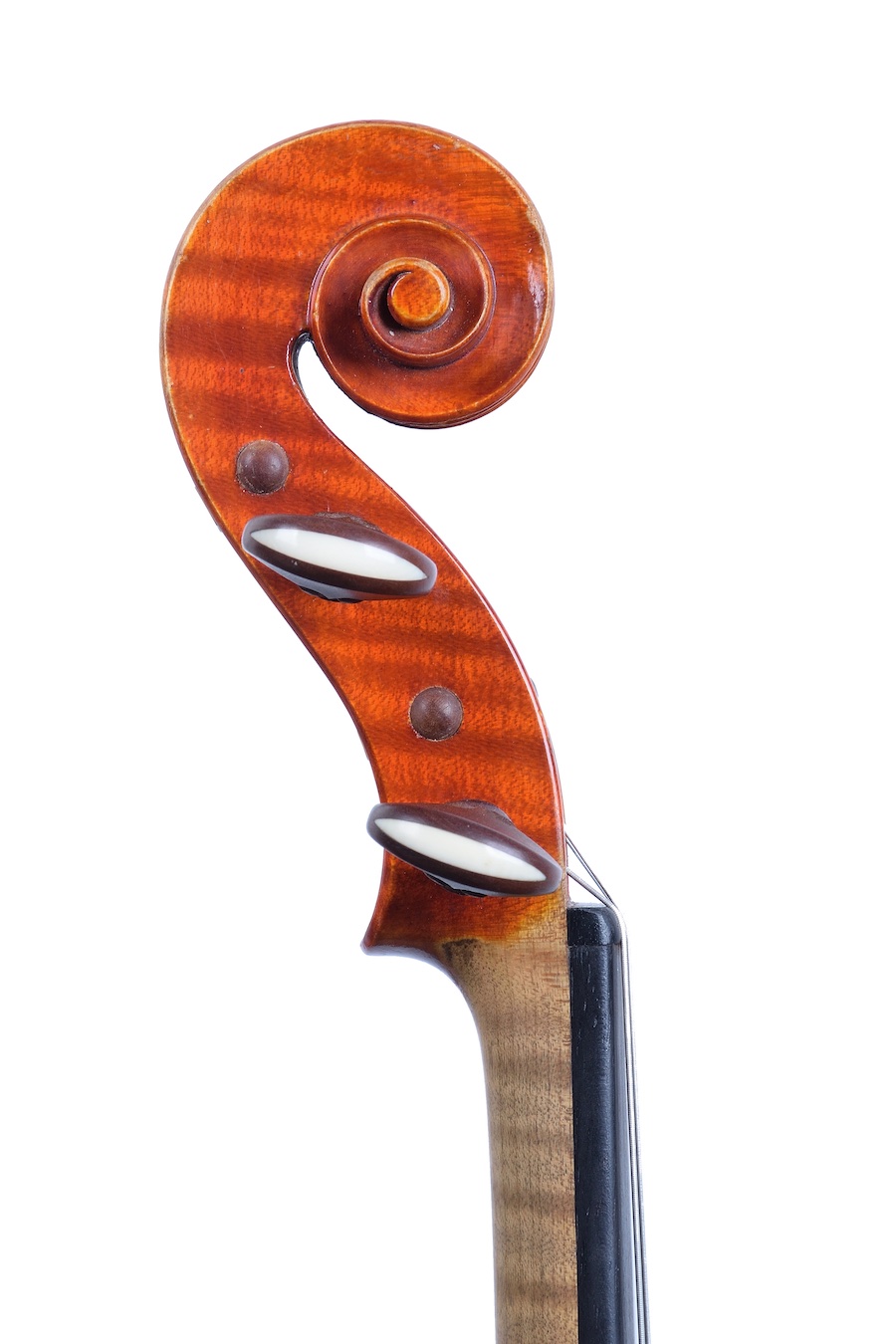
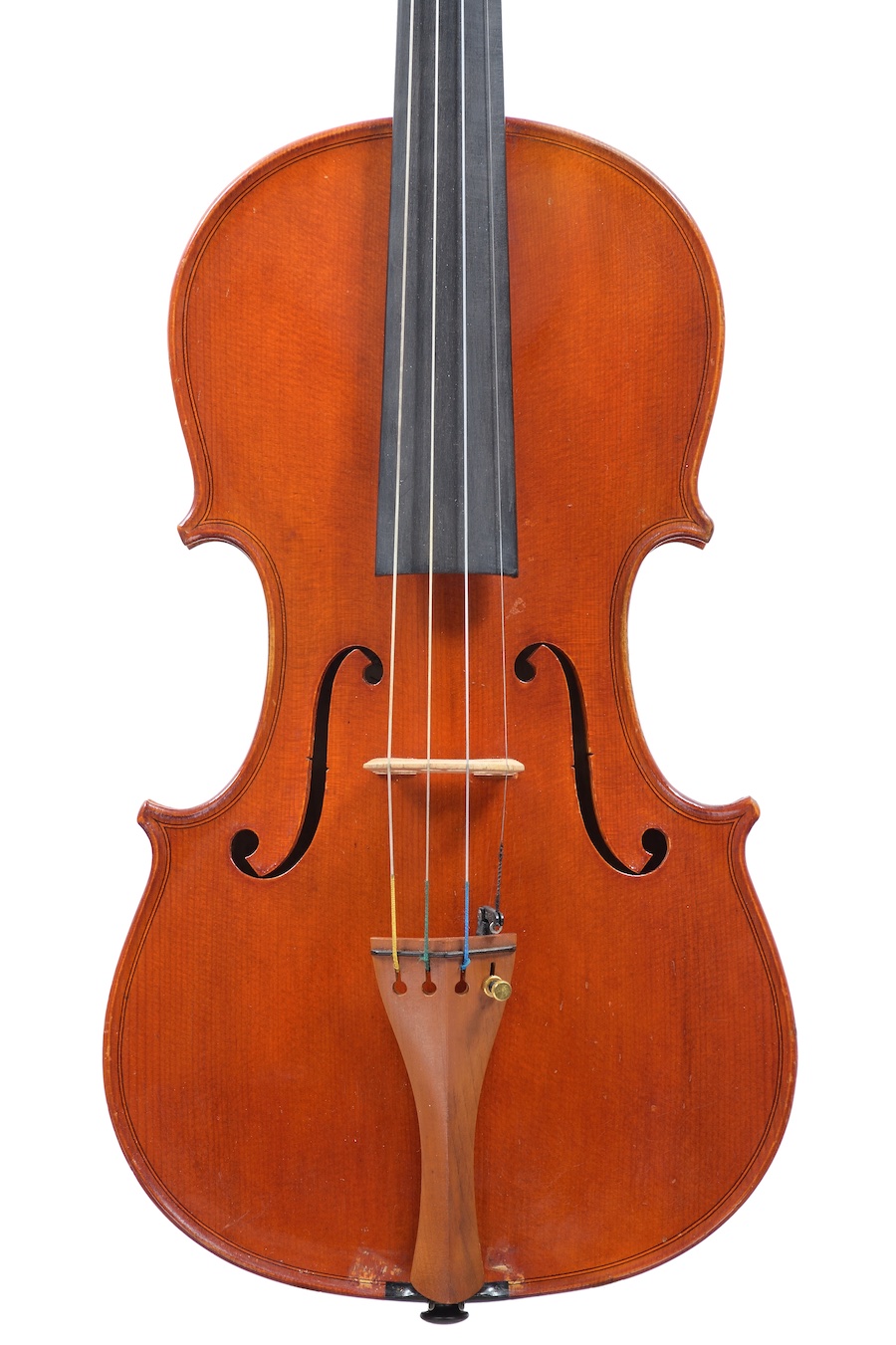
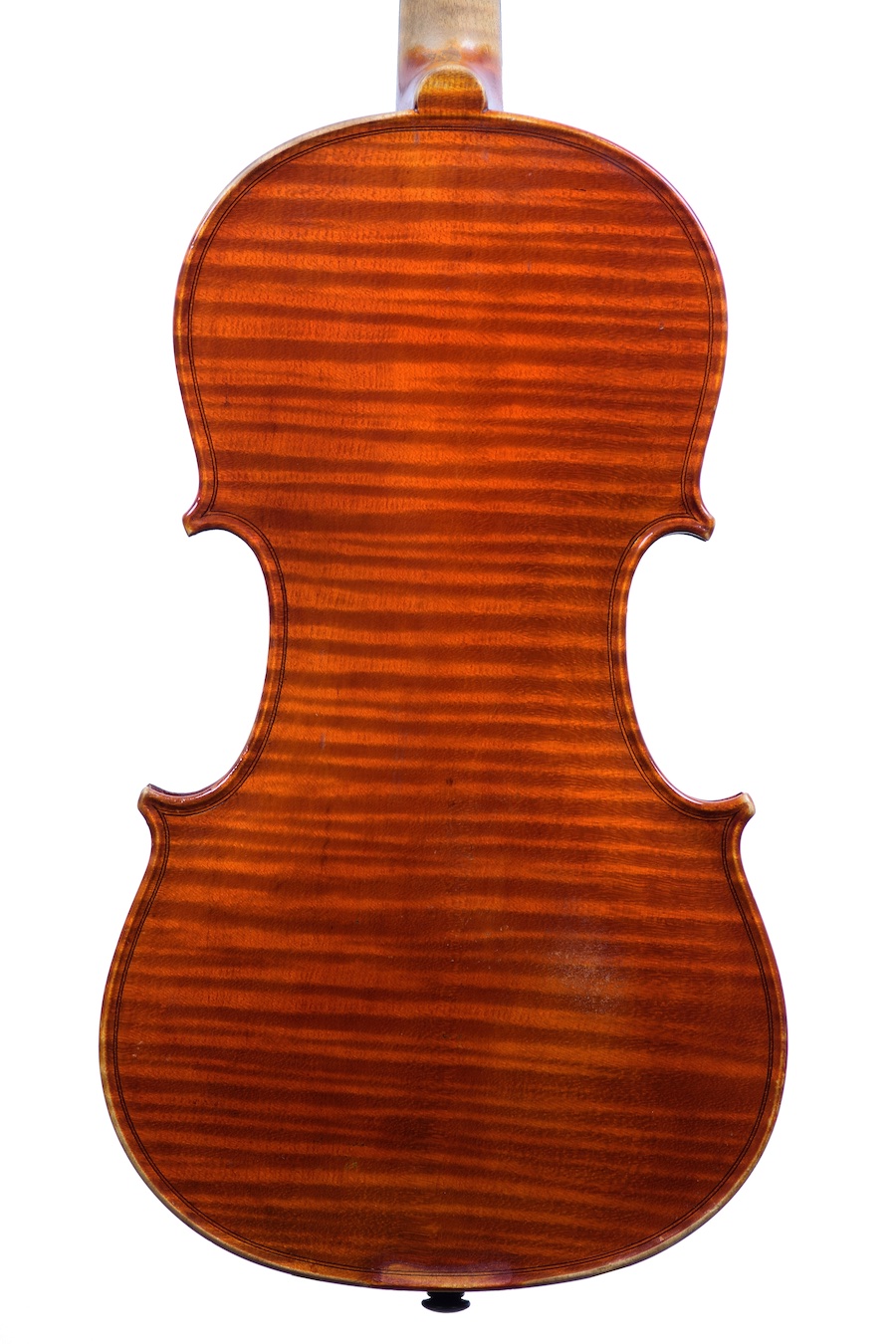
Cesare Candi's style is very personal and recognizable. His models are mostly Stradivari-inspired, with a rounded C-bout of moderate length, elongated corners connected to the lower and upper bouts by a long flattened section. The fluting is deep and carved outwards; the precise inlay of the purfling is cut at a considerable distance from the edge. The scroll (often embellished by the typical Genoese pegs) and the F-holes, which are rather long and tilted, also have a Stradivari imprint. Candi played a central role in twentieth-century Genoese violin making, due to his style but also due to his peculiar technique which involved the use of the external mould and linings passing over the corner blocks. Giuseppe Lecchi, Paolo De Barbieri and Lorenzo Bellafontana were his students.