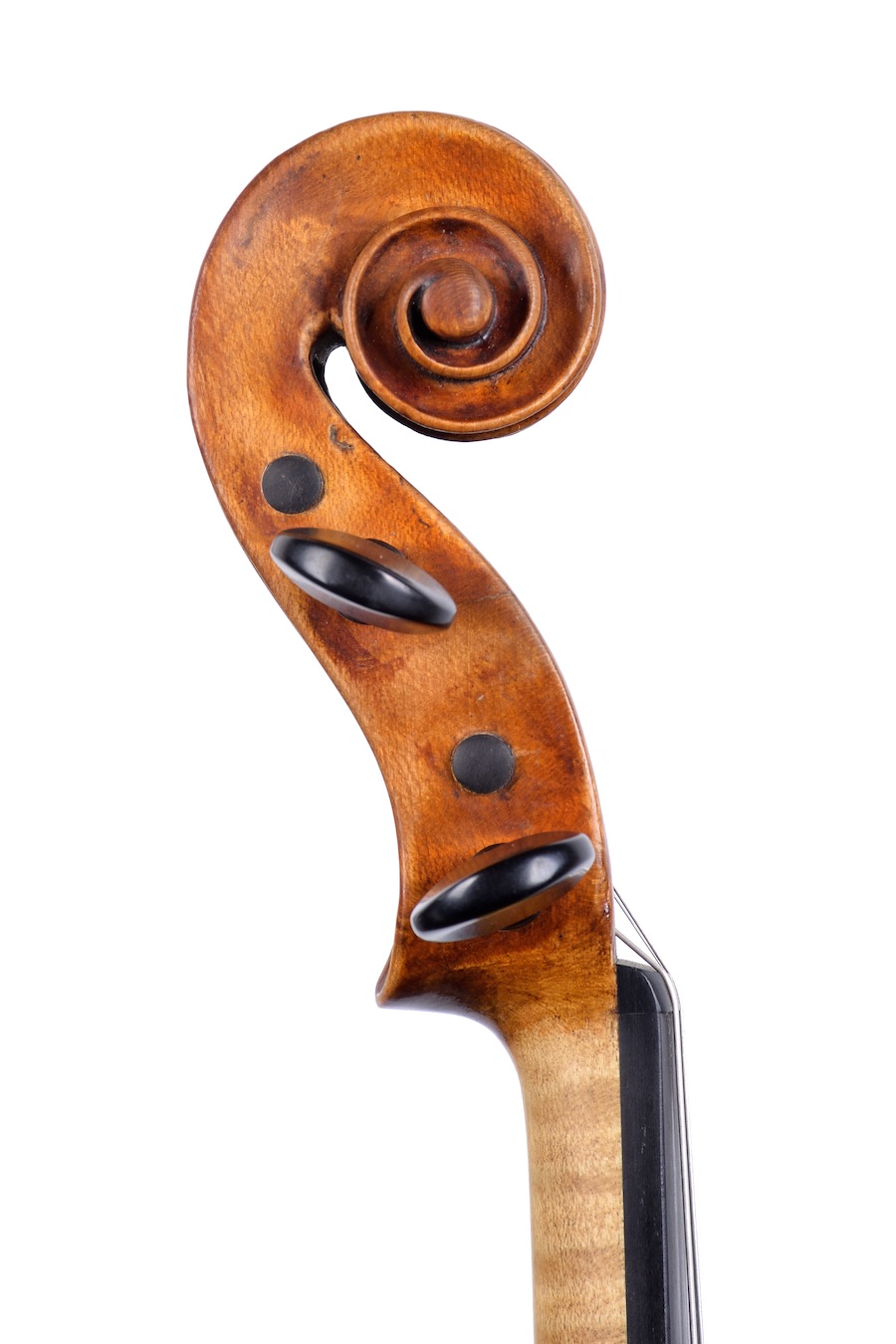
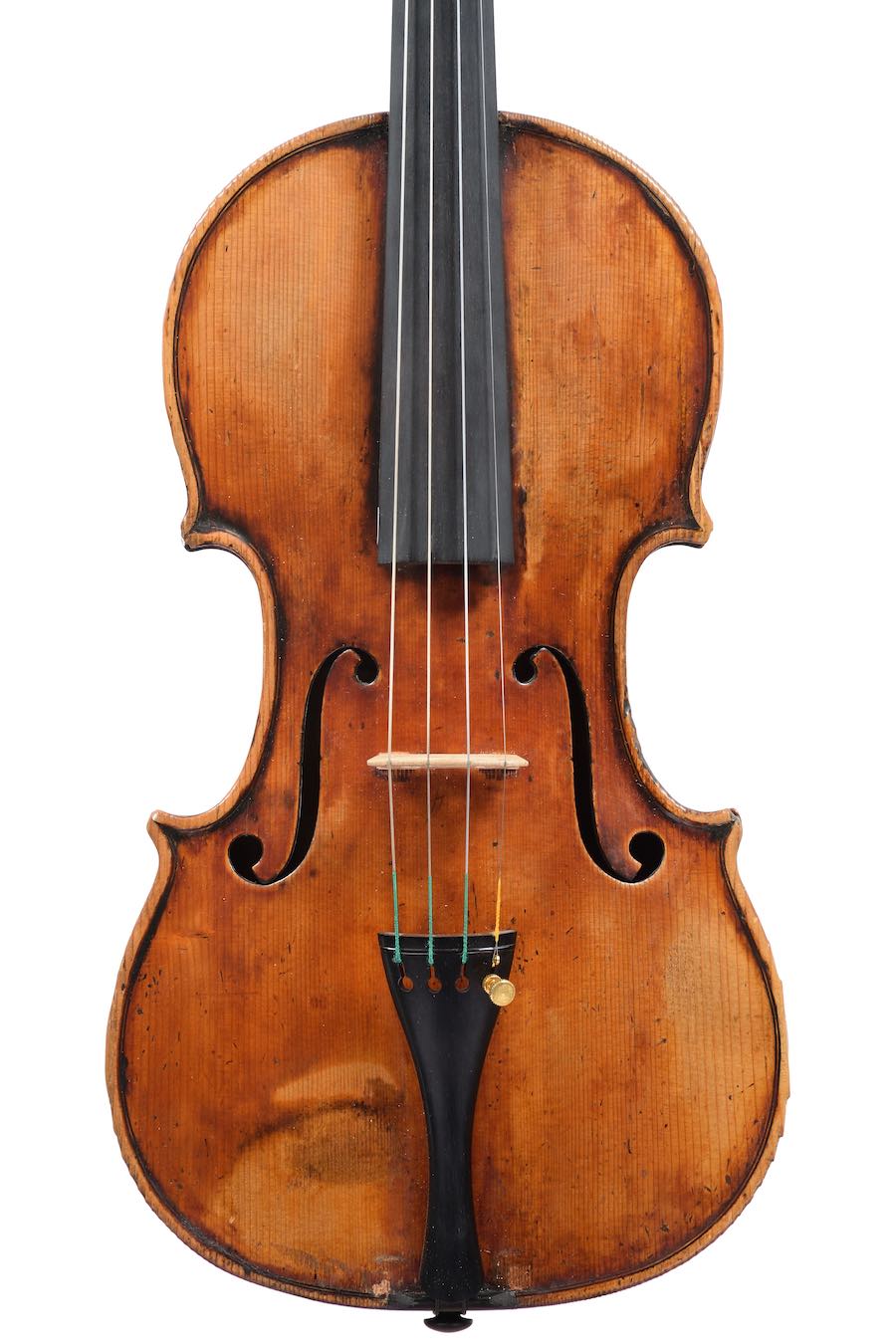
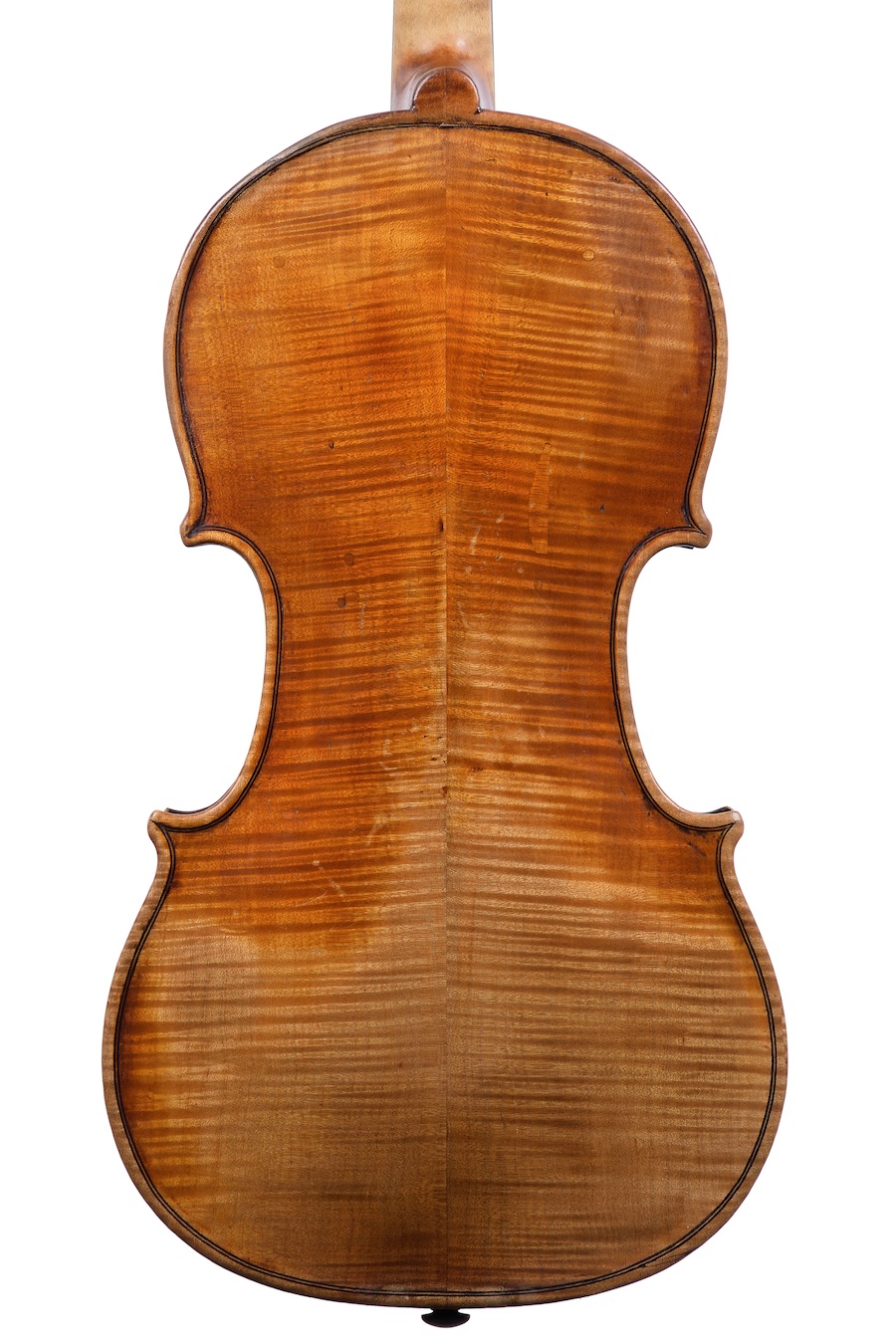
Born in 1828 in a family of millers from Bazzano, a small town south of Bologna, Raffaele Fiorini showed strong artistic aptitudes (taking an interest in music and painting), even before approaching violin making, probably through the contact with the Tadolini brothers from Modena. Only at forty years of age, Fiorini decided to open a worksop in Bologna, encouraged by several musicians who frequented him. His atelier in the central Palazzo Pepoli quickly established itself as a point of reference for the city's string players, and also for young people eager to learn the rudiments of the craft. Among these, Augusto Pollastri, Armando Monterumici, the brothers Oreste and Cesare Candi were all to become renowned luthiers in their own right; furthermore, Raffaele was also naturally responsible for the initial training of his son, Giuseppe Fiorini, whose ambition and precocious talent later led to search for further improvement abroad and finally led to the recovery of the methods of classical Cremonese violin making.
However, Raffaele's approach was different and, anticipating much of the subsequent modern Bolognese tradition, involved the use of the external mould. From a stylistic point of view as well, Raffaele can be considered the father of many Emilia-Romagna makers active during the following decades; his workmanship, while decisive and personal, is softened in all details, with a narrow fluting of the plates, the scrolls carved deeply and finished with a rounded bevel. The F-hole model will also have a deep influence on local tradition, with tapered stems and elegantly ovalized eyes. Raffaele Fiorini's varnish is of a soft texture and rich red-brown color. His production, rather rare, was particularly focused on making cellos and some violins.