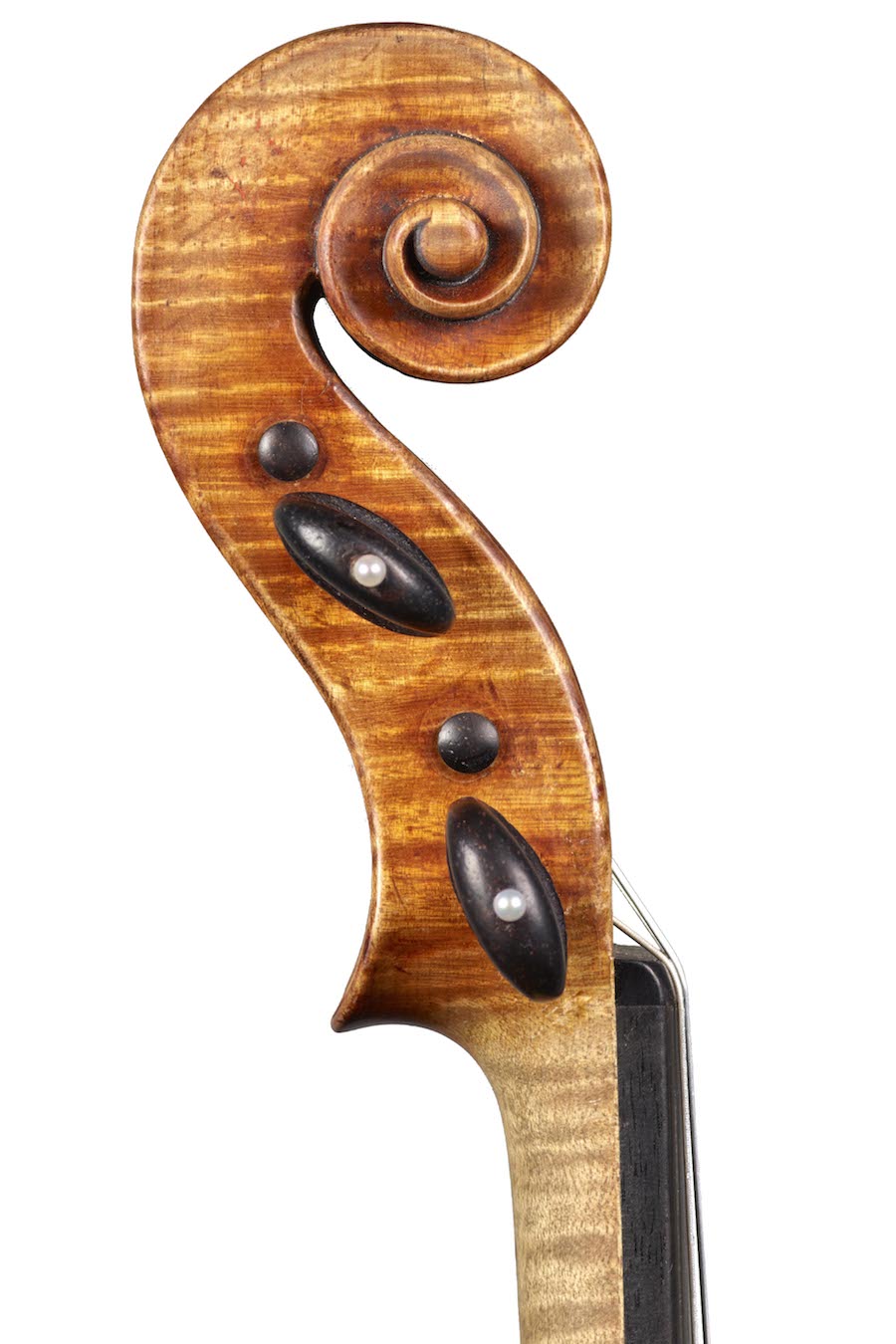
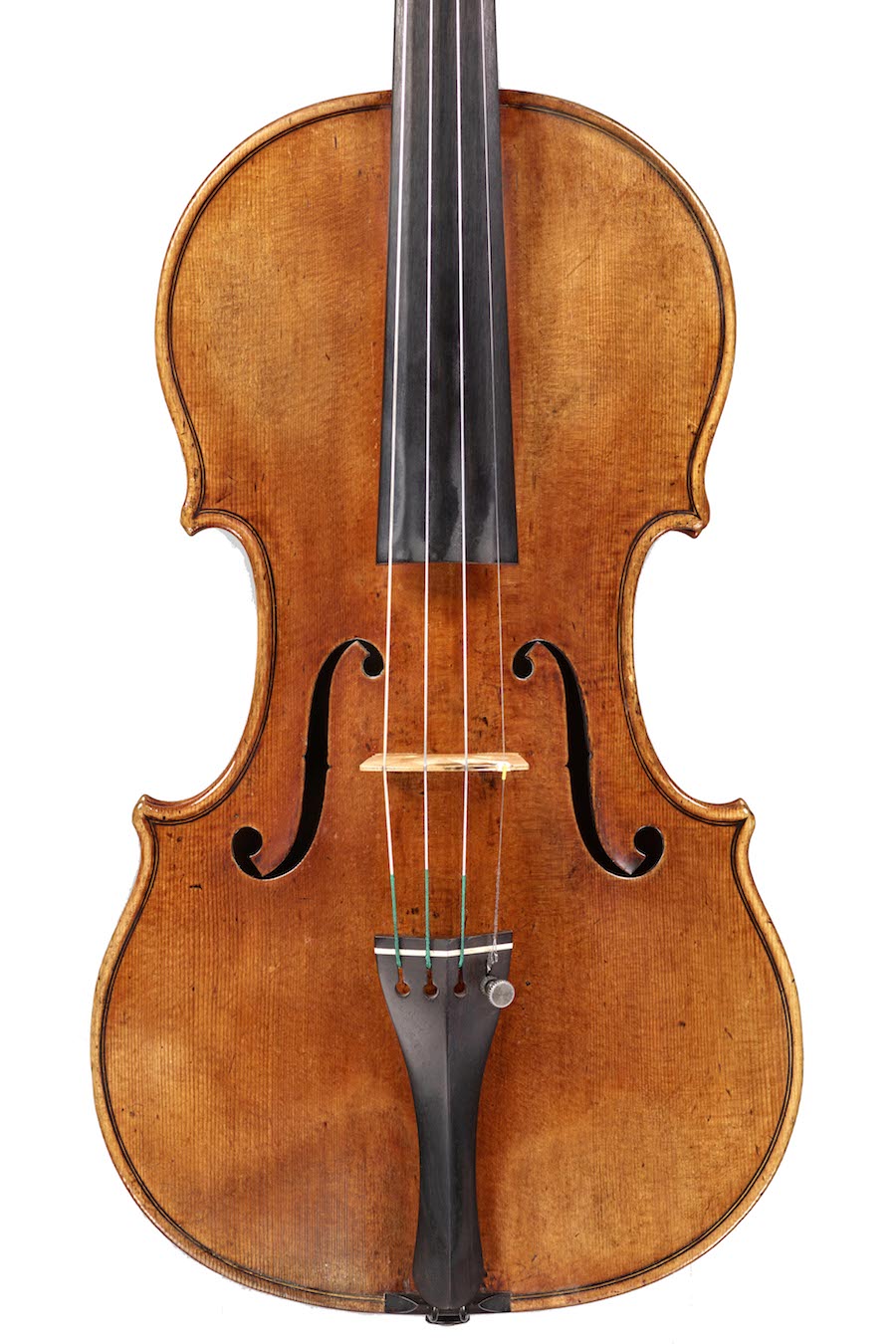
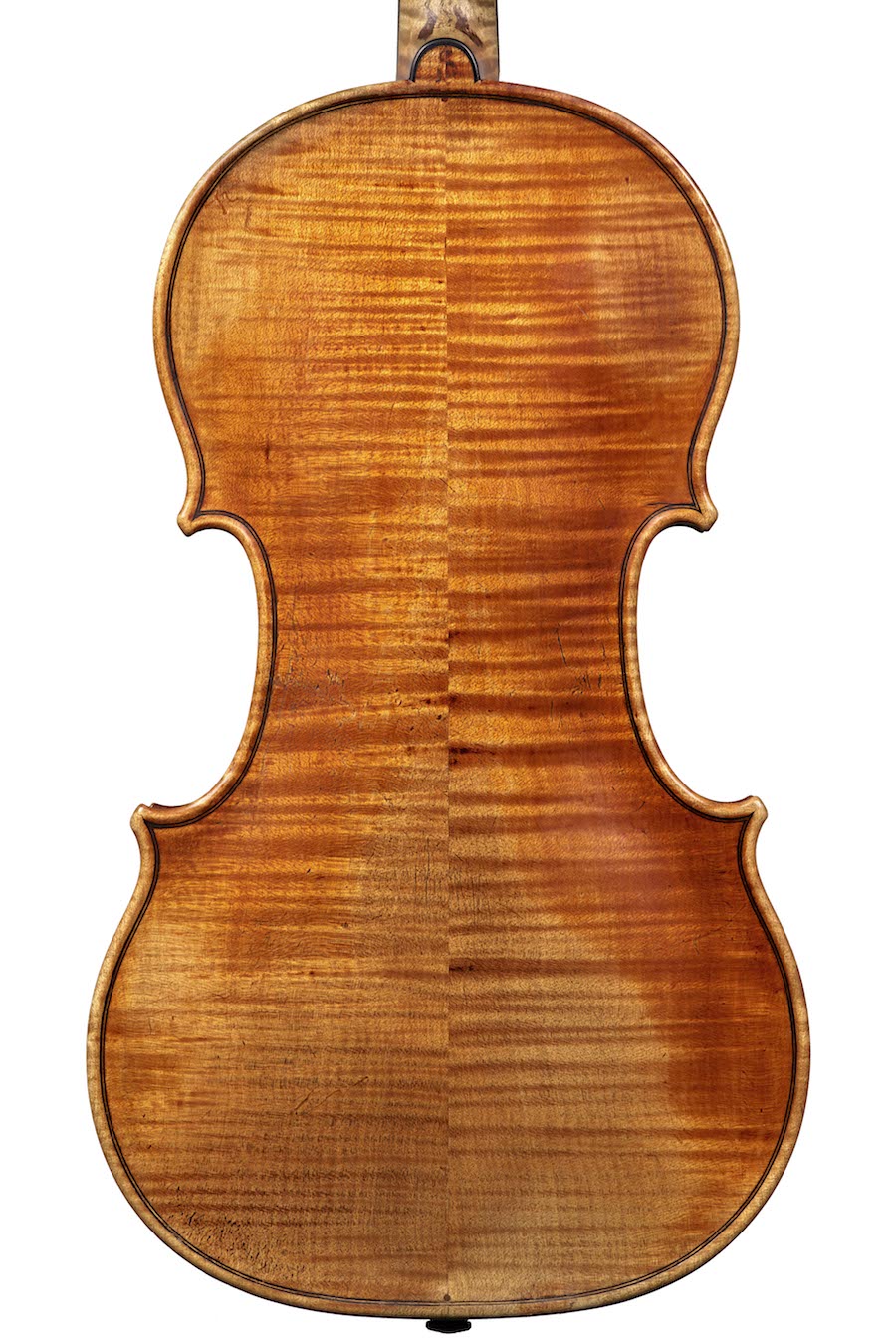
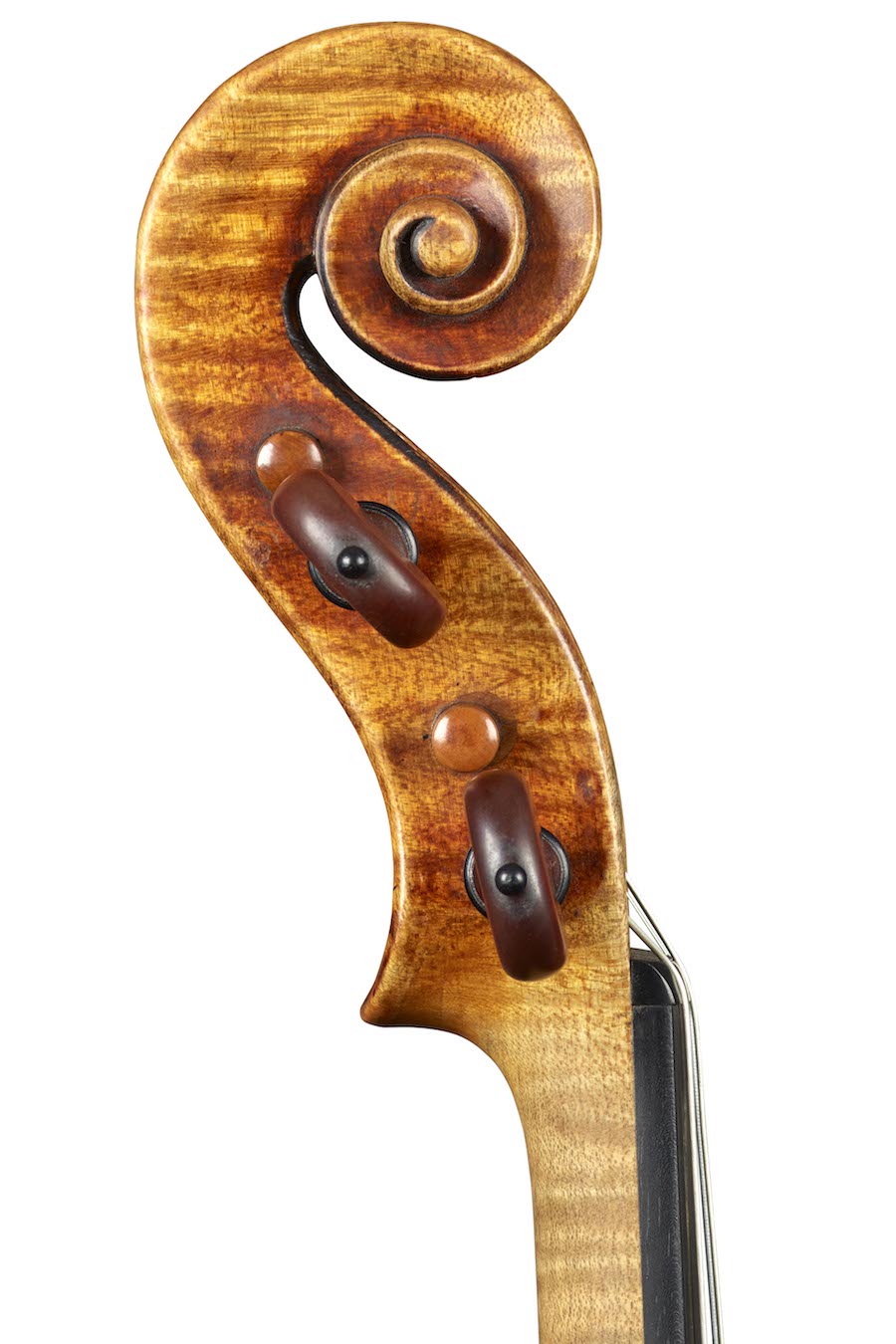
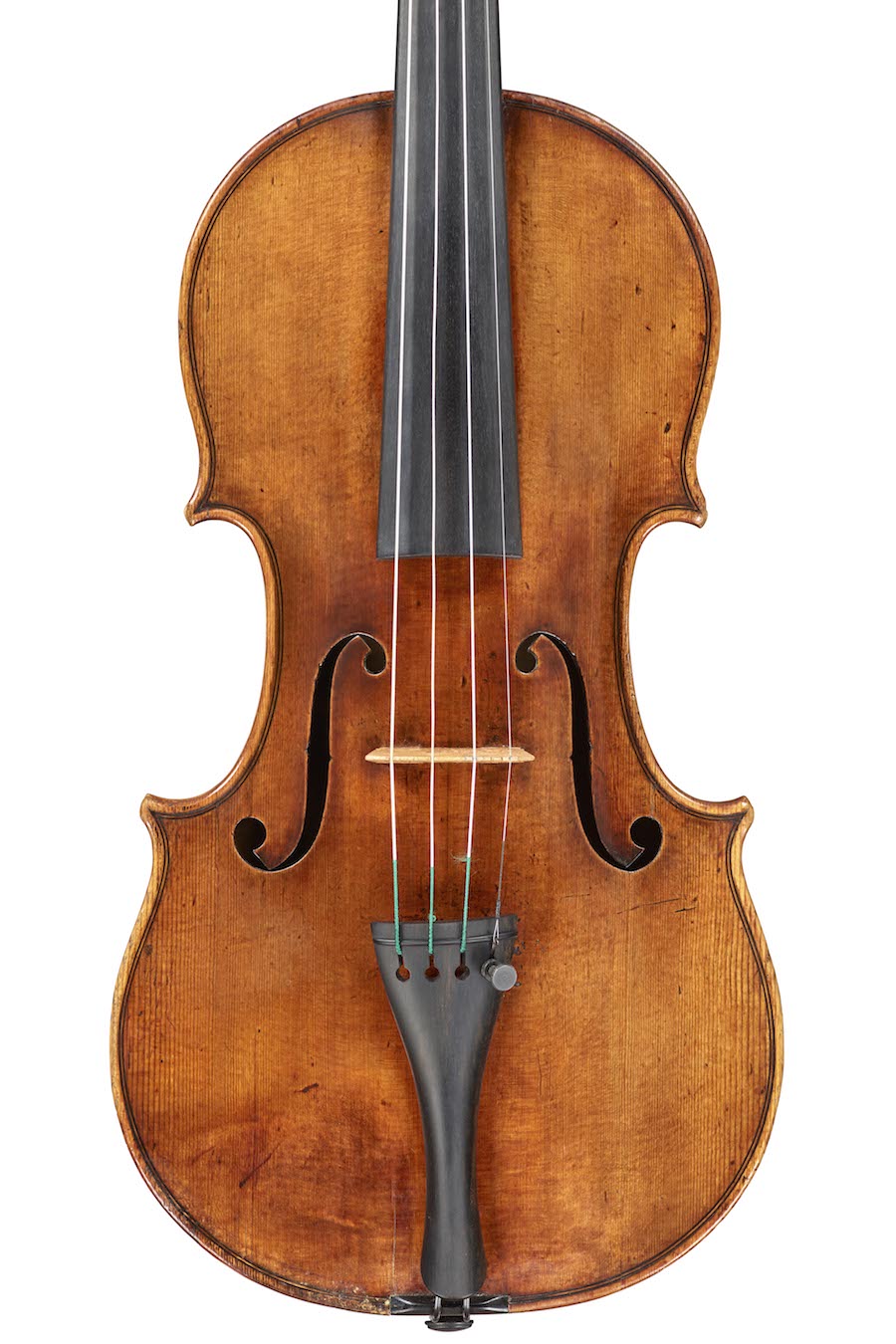
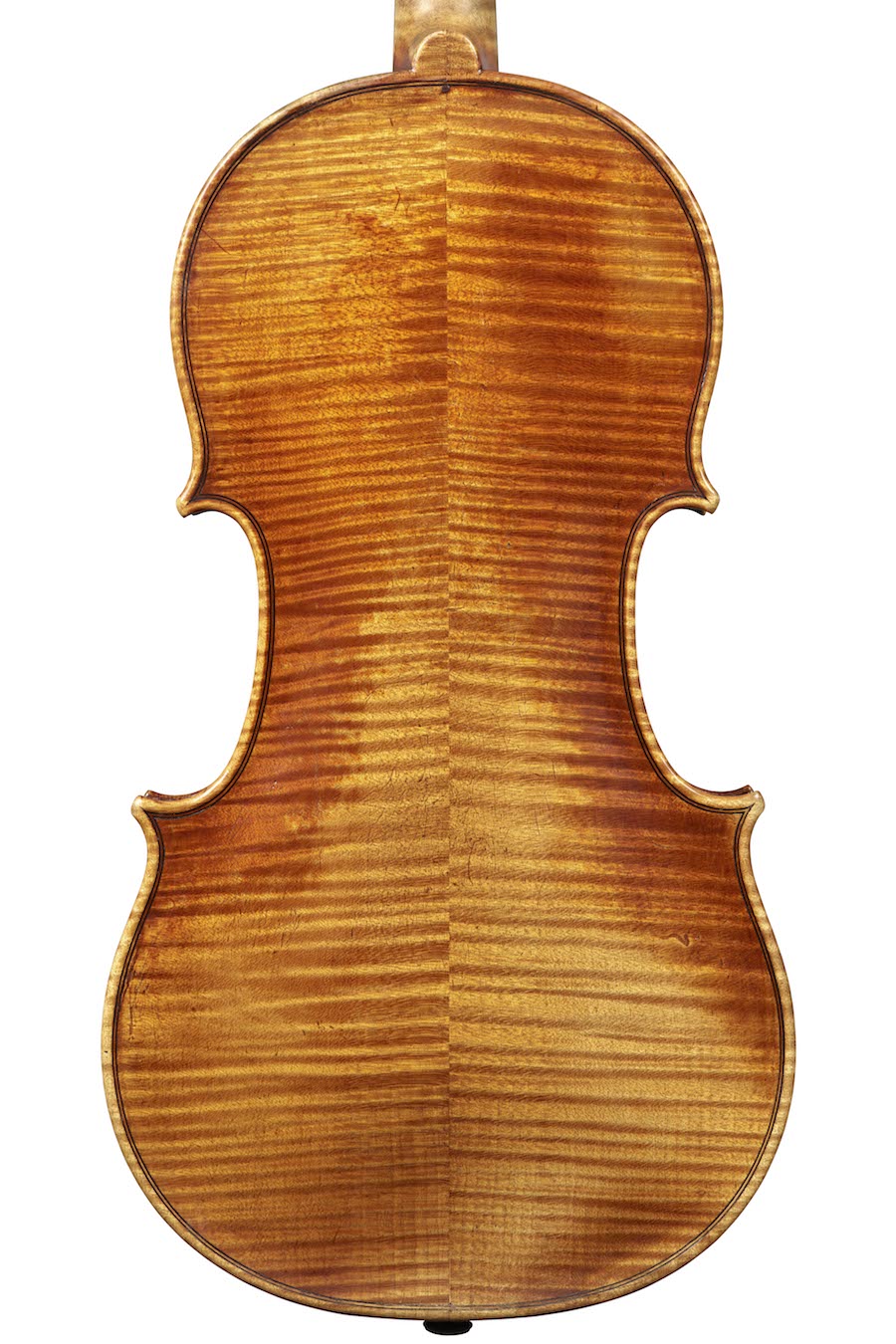
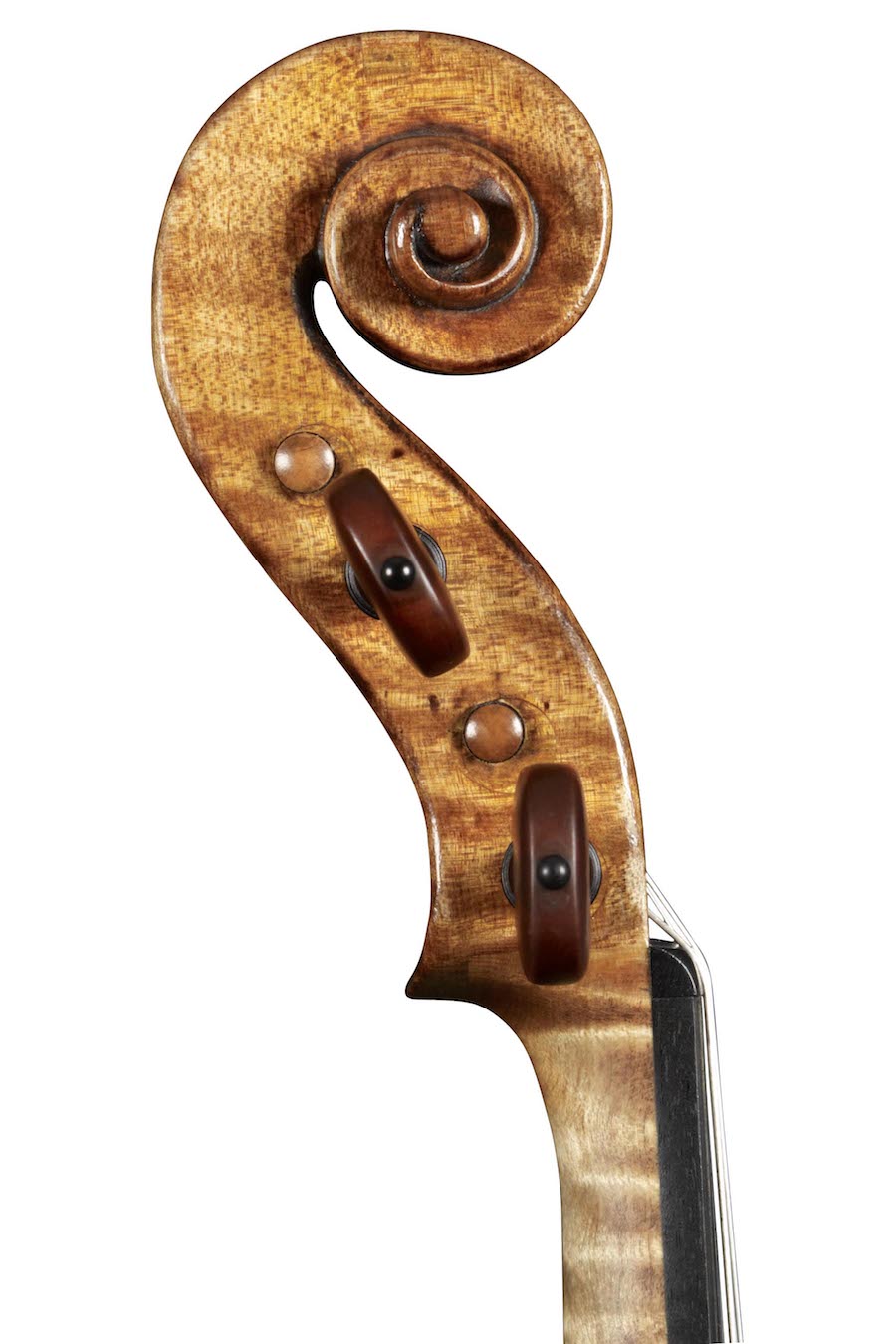
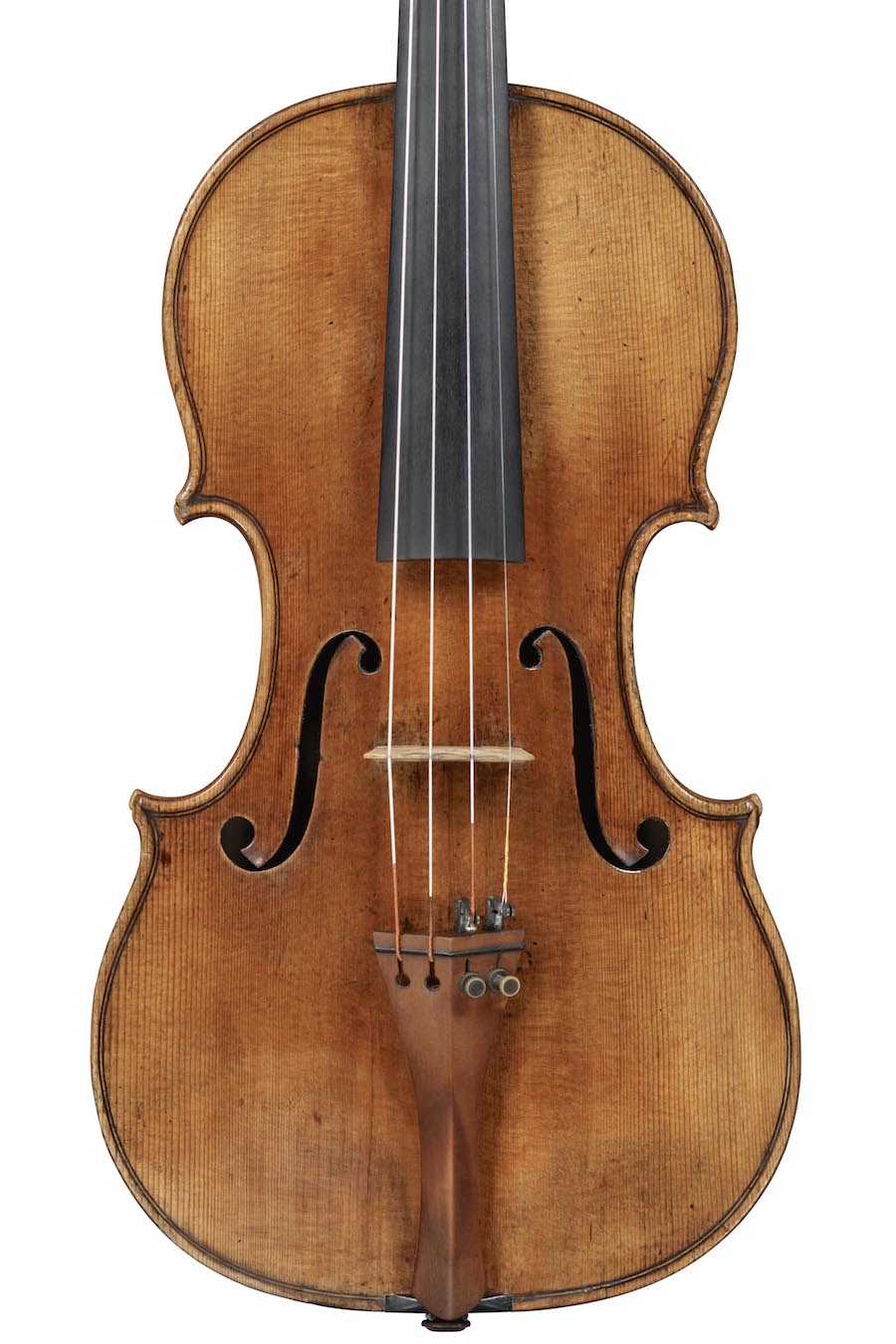
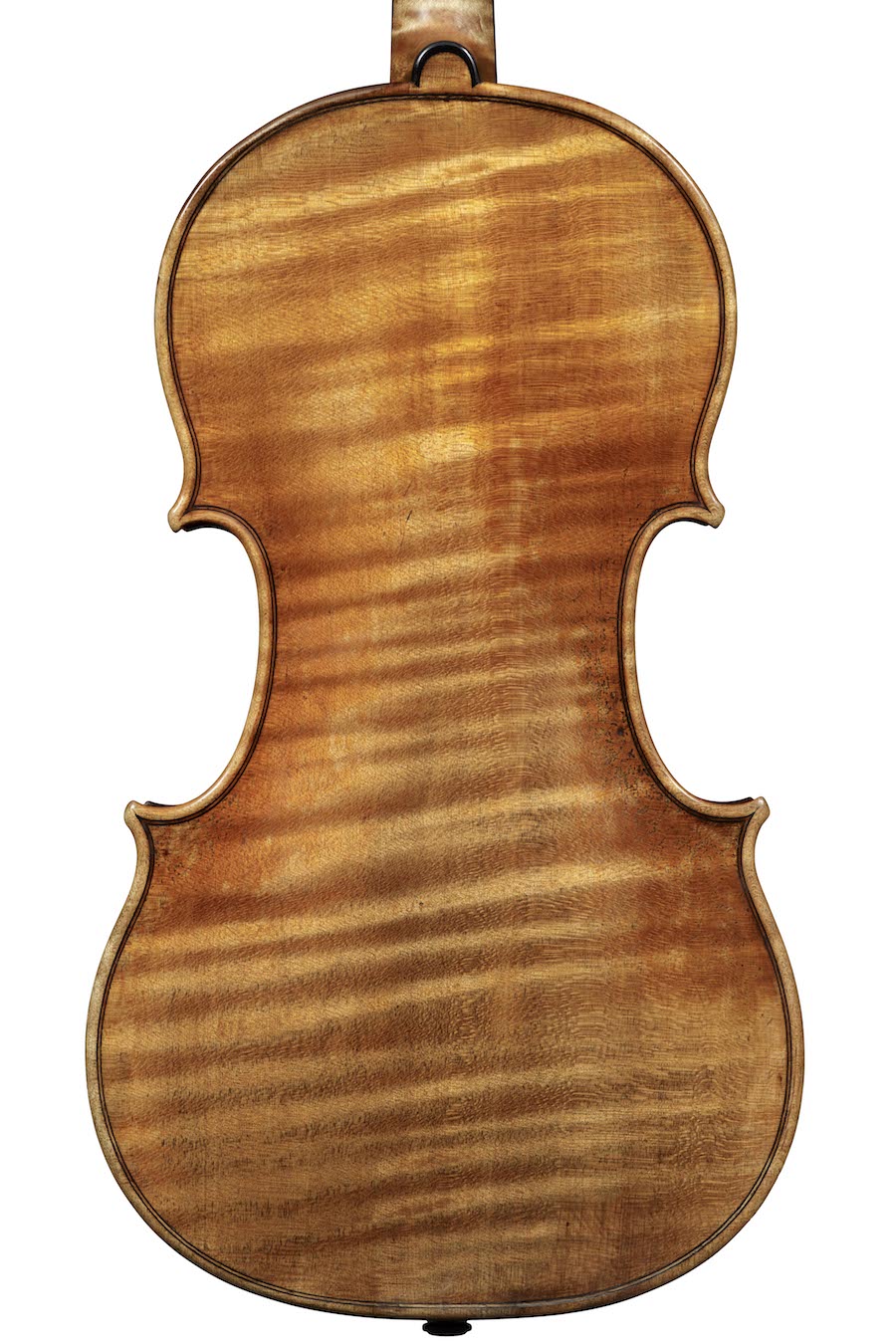
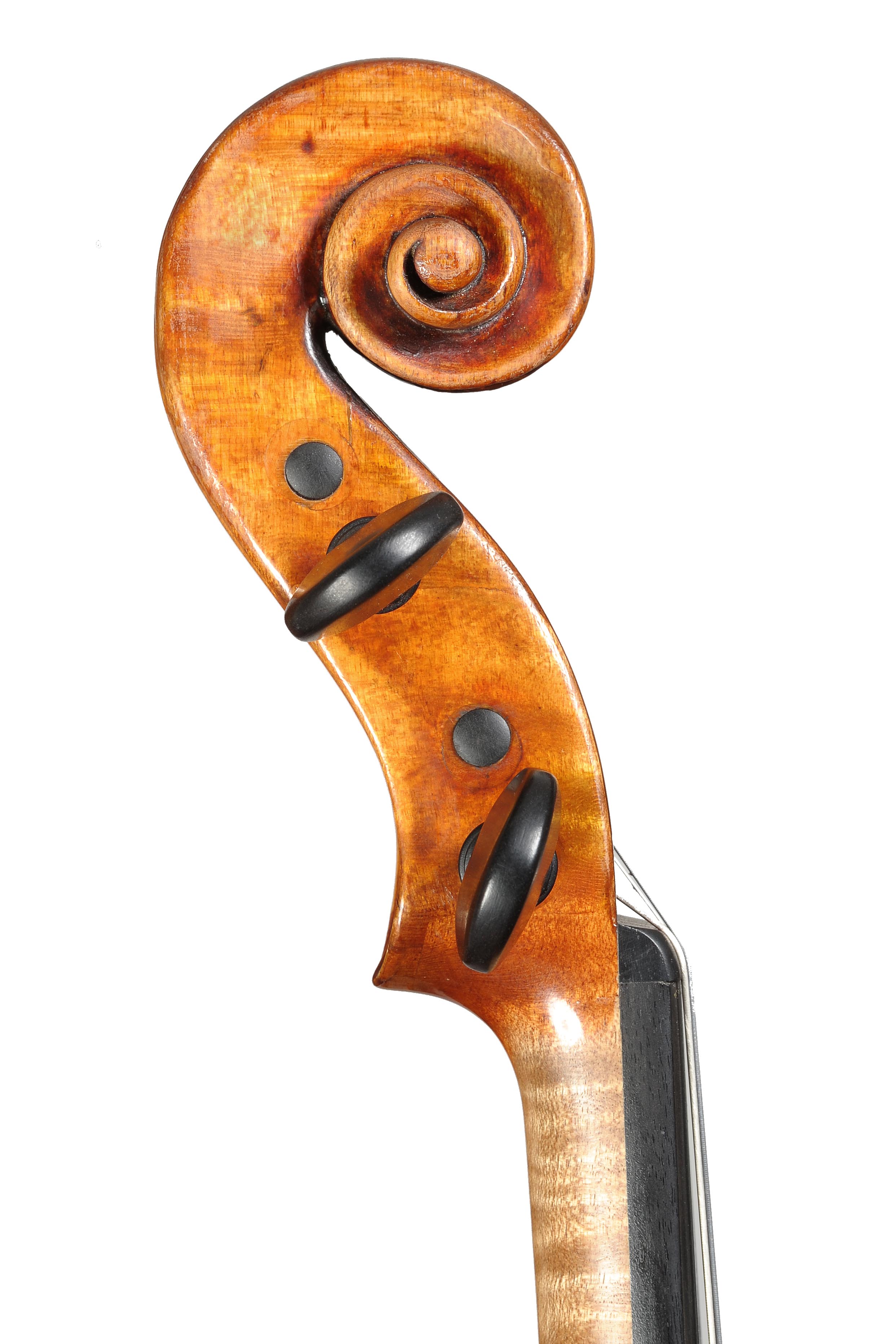
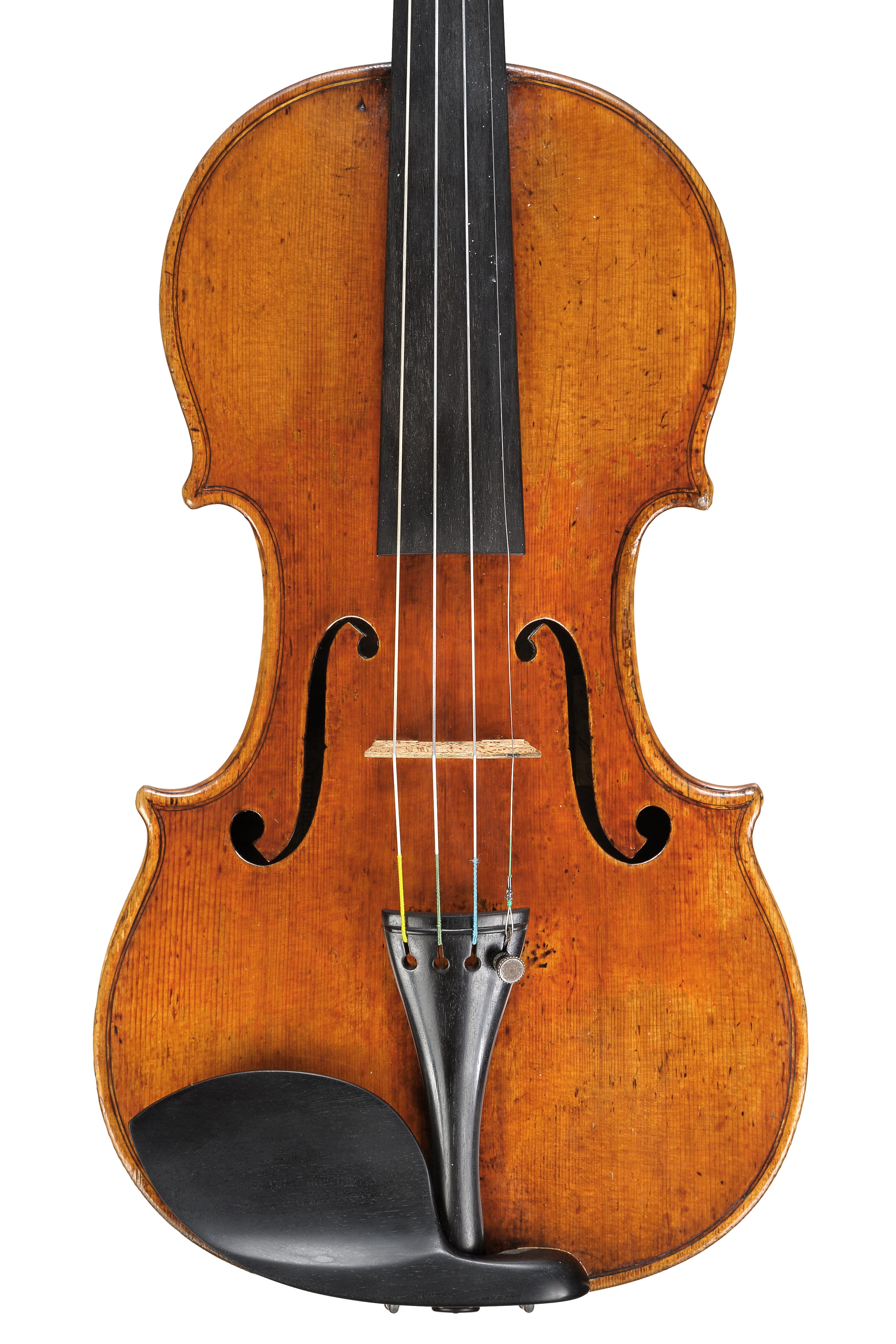
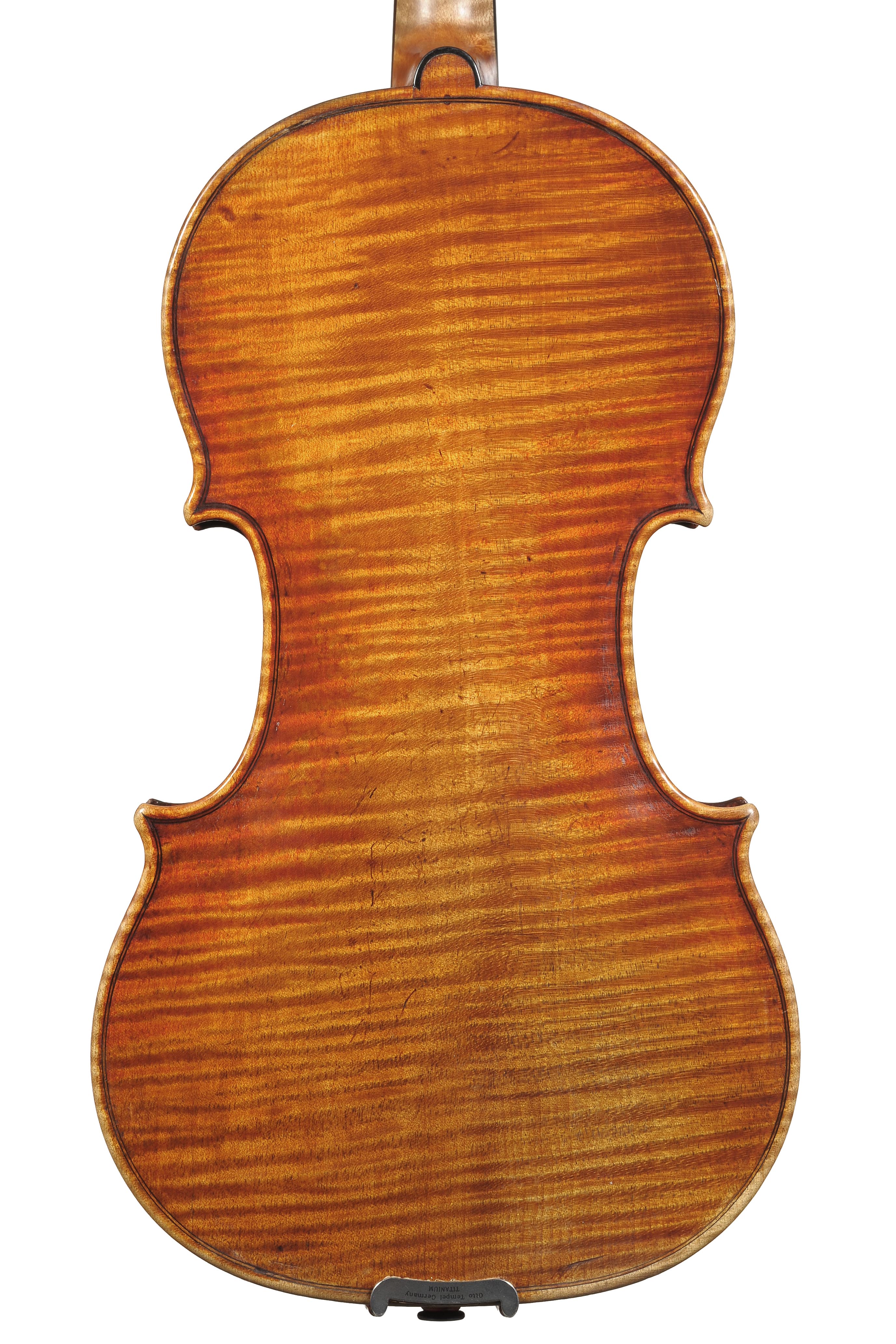
Even if the birth certificate of Antonio Stradivari has never been found in the archival sources, it is generally assumed that he was born in Cremona in 1644, based on subsequent attestations of his age, although other theories propose 1649 as his year of birth. In a 1666 original label found in what is thought to be his first instrument, Stradivari claimed to be a pupil of Nicolò Amati, but his presence in his workshop has not been proven and it is difficult to understand why this label would have been used only once. In any case, based on his family connections and his closest acquaintances, it can be presumed that Stradivari had received training as a carver and decorator, a highly specialized woodworker, and at the same time he was also in close relationships with the Rugeri family.
His independent instrument making began during the second half of the 1660s, and continued for an exceptionally long career spanning over seventy years. After the first instruments based on very slender patterns and sometimes made with simple materials, by the 1680s Stradivari was able to imitate closely the style of the Amatis' Grand Pattern violins, and completed a series of precious instruments decorated in a virtuosic way that soon spread his reputation to all of Europe, with orders coming in from several noble clients. The luthier was a great experimenter with different formats and styles. During the last decade of the seventeenth century, Stradivari introduced a new model now known as his Long Pattern, which was probably inspired by the large violins of Giovanni Paolo Maggini. Starting from the 1700s, Stradivari attained the canon of proportions that he continued to use for most of his later instruments and which would also be considered ideal by numerous makers who took up his models. From an acoustic point of view as well, the period after 1700 marked the introduction of a lower and flatter arching, which was later much appreciated for the fuller sound it imparted to his instruments.
Stradivari played a fundamental role in the development of the modern cello; after his first large basses, the luthier progressively reduced the format of these instruments, and introduced in the first decade of the eighteenth century the pattern considered by many as ideal, although Stradivari himself actually continued to experiment with different and even more compact proportions during the final part of his career. His interest in violas, on the other hand, was more limited and he only produces about ten examples, mostly contraltos but also a few rare tenor violas. On the other hand, there are countless other types of instruments made in his workshop: viola d'amore, gambas pochettes and, in the field of plucked instruments, harps, several guitars, mandolins and lutes of different formats; bows and cases were also made. The Stradivari workshop was probably very well organized, with his sons Francesco, Omobono and, for a shorter period, Giovanni Battista Martino working alongside their father; it is believed that the instruments made there exceeded a thousand, of which well over half are still in existence. Despite the many luthiers who claimed to be his pupils, Stradivari was very reluctant to admit apprentices outside the family circle. Indeed, it can be assumed that the only external collaborator ascertained was Carlo Bergonzi, whose hand can be recognized in some Stradivari instruments from the 1720s and 1730s, and who was then called upon in 1745 to continue the activity after the death of Stradivari's sons.
Despite the scarcity of direct pupils, Stradivari's work had an enormous influence on all subsequent makers, not only in Italy but throughout Europe. The drawings, tools, forms from his workshop constitute, in the Italian context, the only materials of this type that have survived to date, thanks to the interest of the Piedmontese collector Cozio di Salabue who bought them from the Stradivari heirs. Later these relics were acquired by the Bolognese luthier Giuseppe Fiorini, who donated them to the city of Cremona. Thanks to this legacy, they still form the basis of the technical understanding of contemporary luthiers, also following the reorganization carried out in the 1960s by Simone Fernando Sacconi and the publication of his text "The secrets of Stradivari".