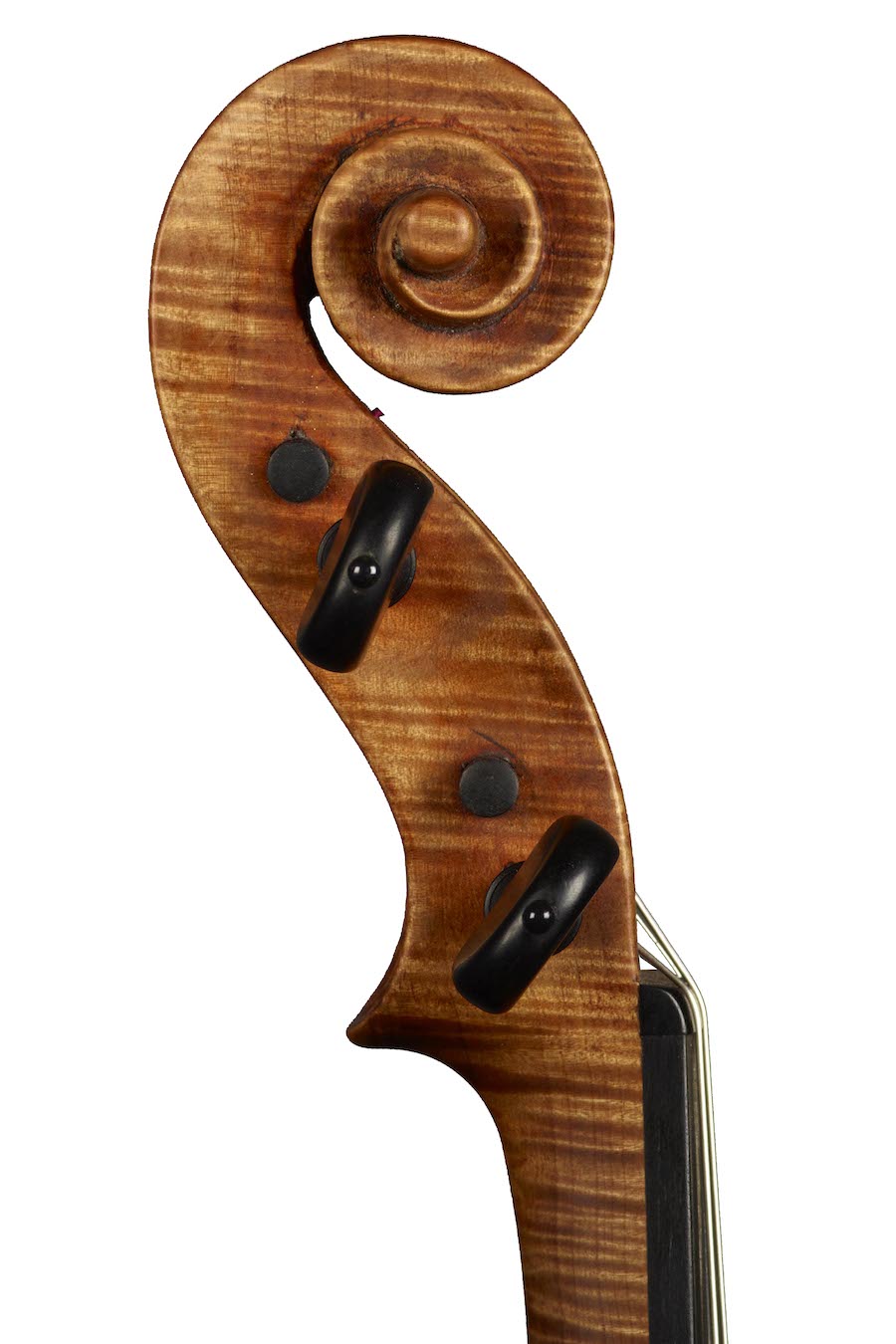
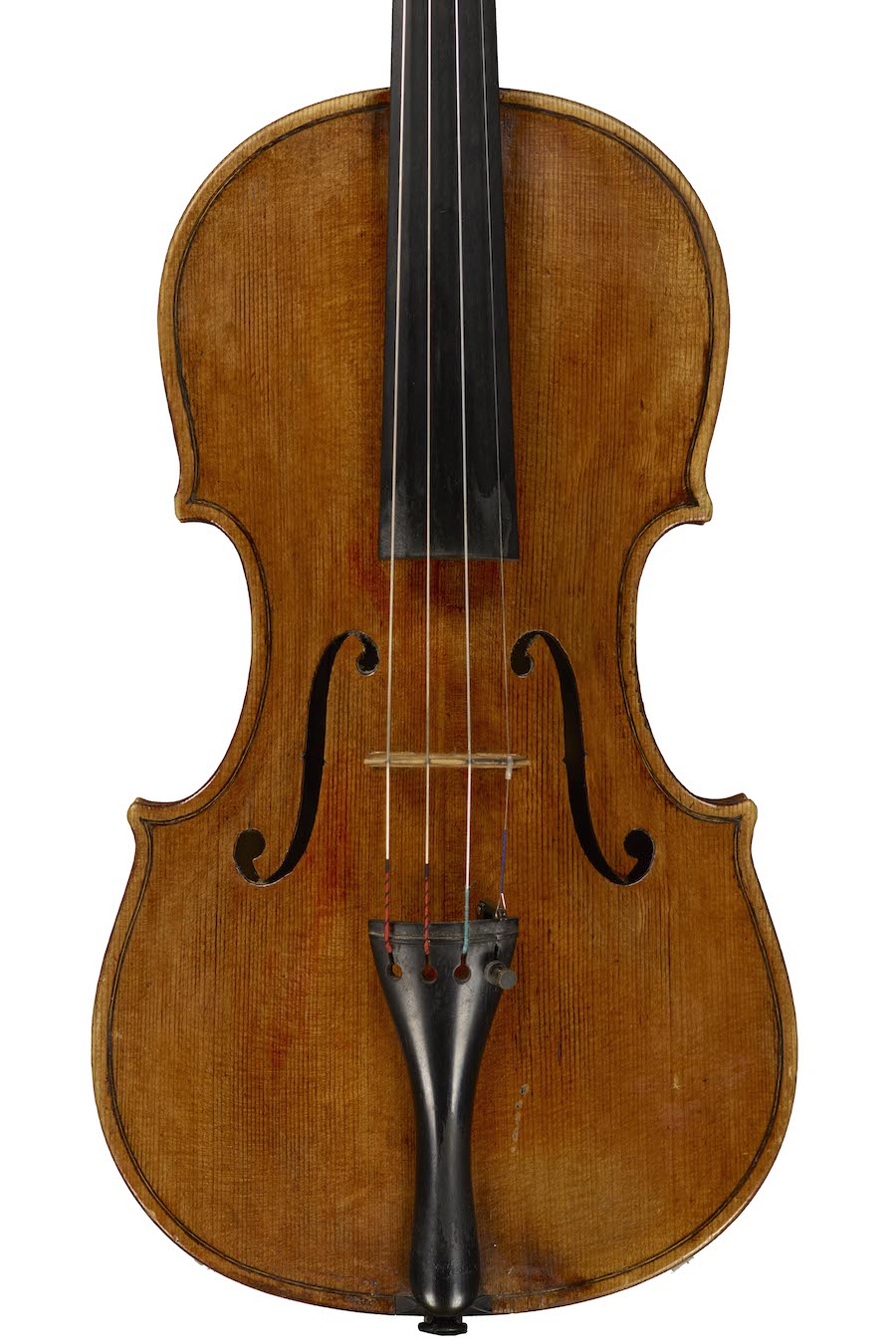
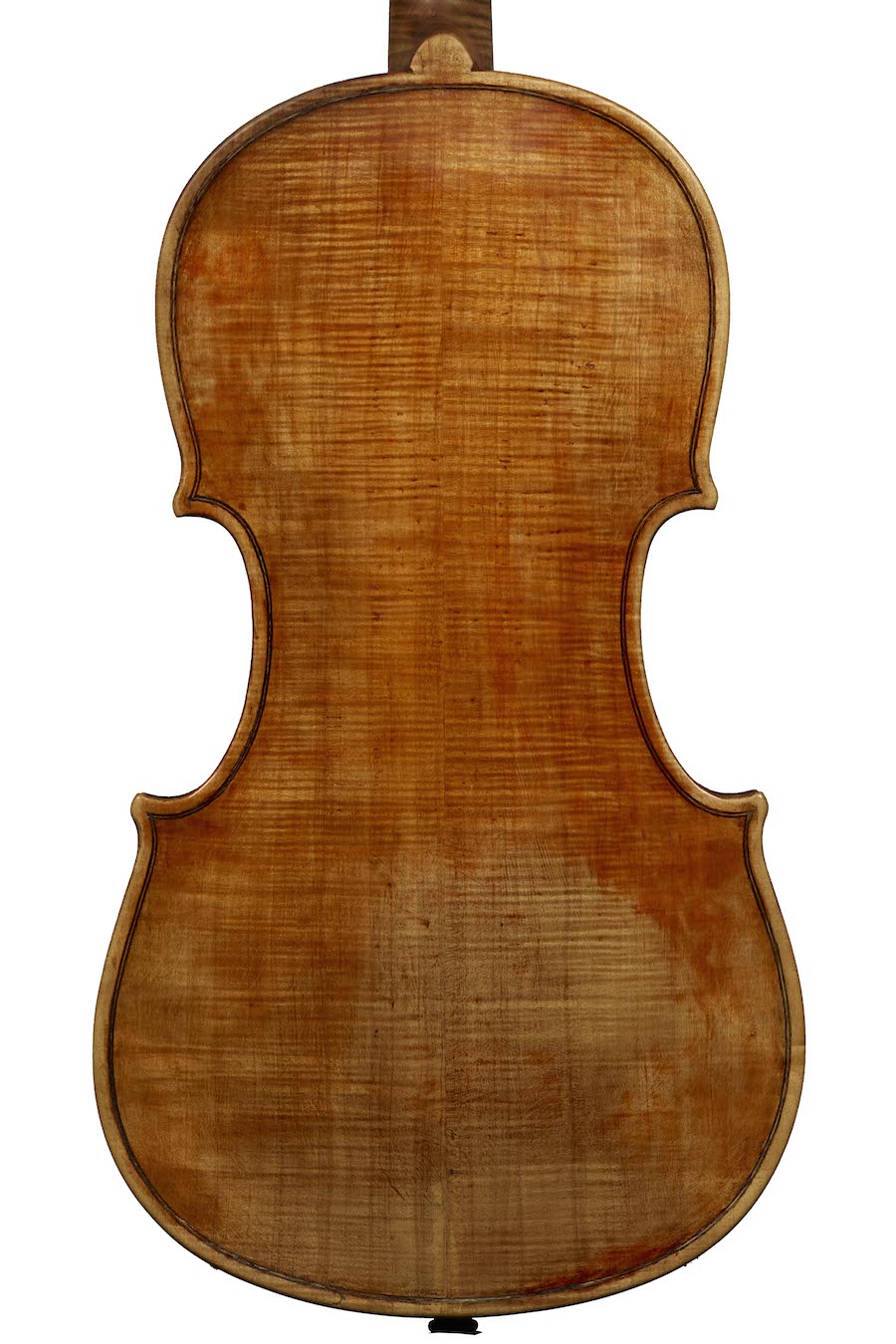
Born in Valdobbiadene in 1847, Antonio Pivetta arrived in Mantua in 1903 after having stayed with his family in various Italian cities, brought there from his job as a prefecture official. It was therefore as an amateur that he approached the making of musical instruments thanks to his acquaintance to Stefano Scarampella.
With the exception of the work by Gaetano Gadda, the only actual apprentice of the master, Antonio Pivetta's instruments are those that are closest to Stefano Scarampella's style, and indeed many of them were mistaken for such in the following decades. Nowadays, the characteristic features of Pivetta are better known: the corners are short and the fluting very flat, but the most prominent feature shows itself from the front view of the volute, with its marked over-cutting. Pivetta left Mantua in 1910, but then continued to make instruments in Padua as well, albeit in a slightly different style.