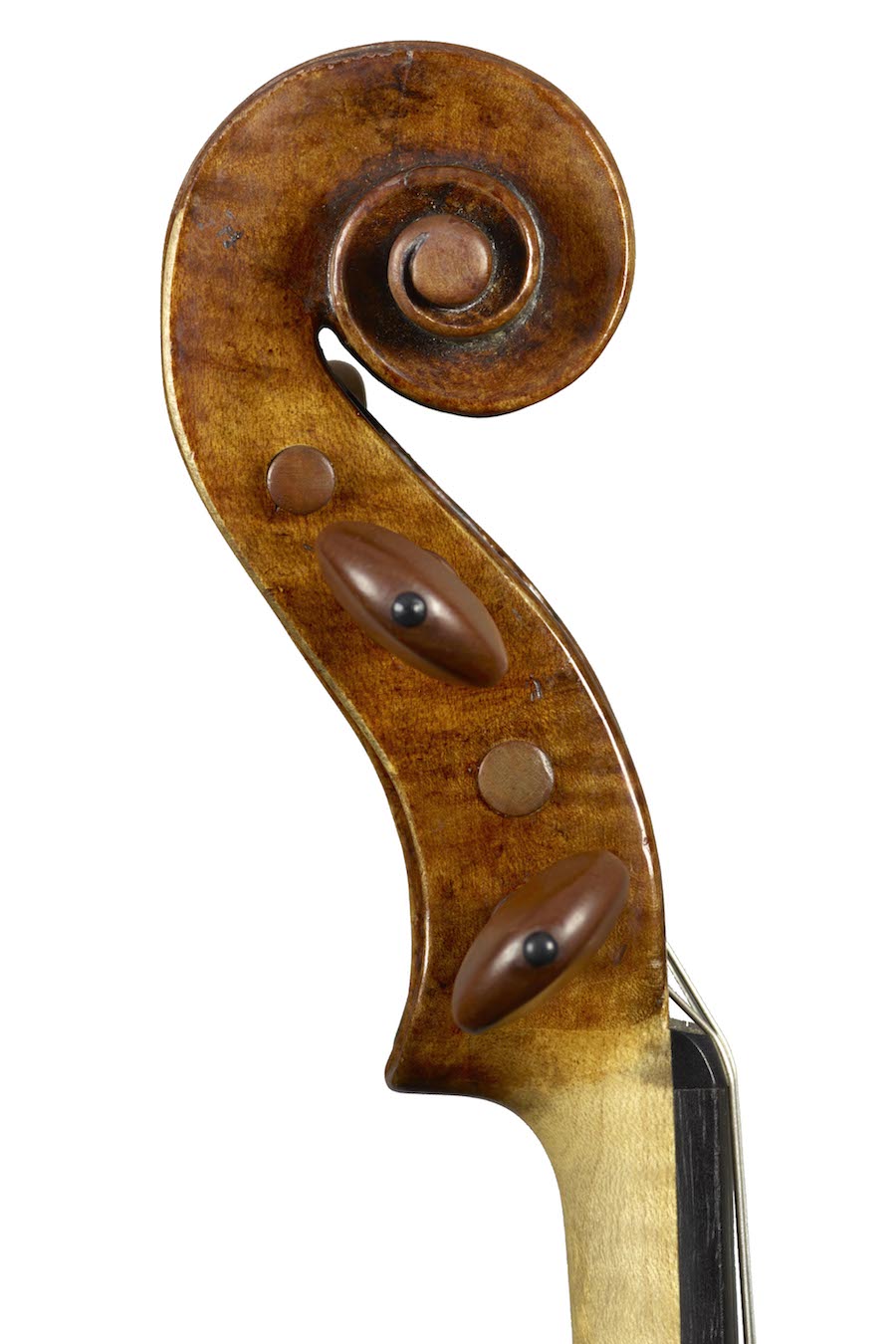
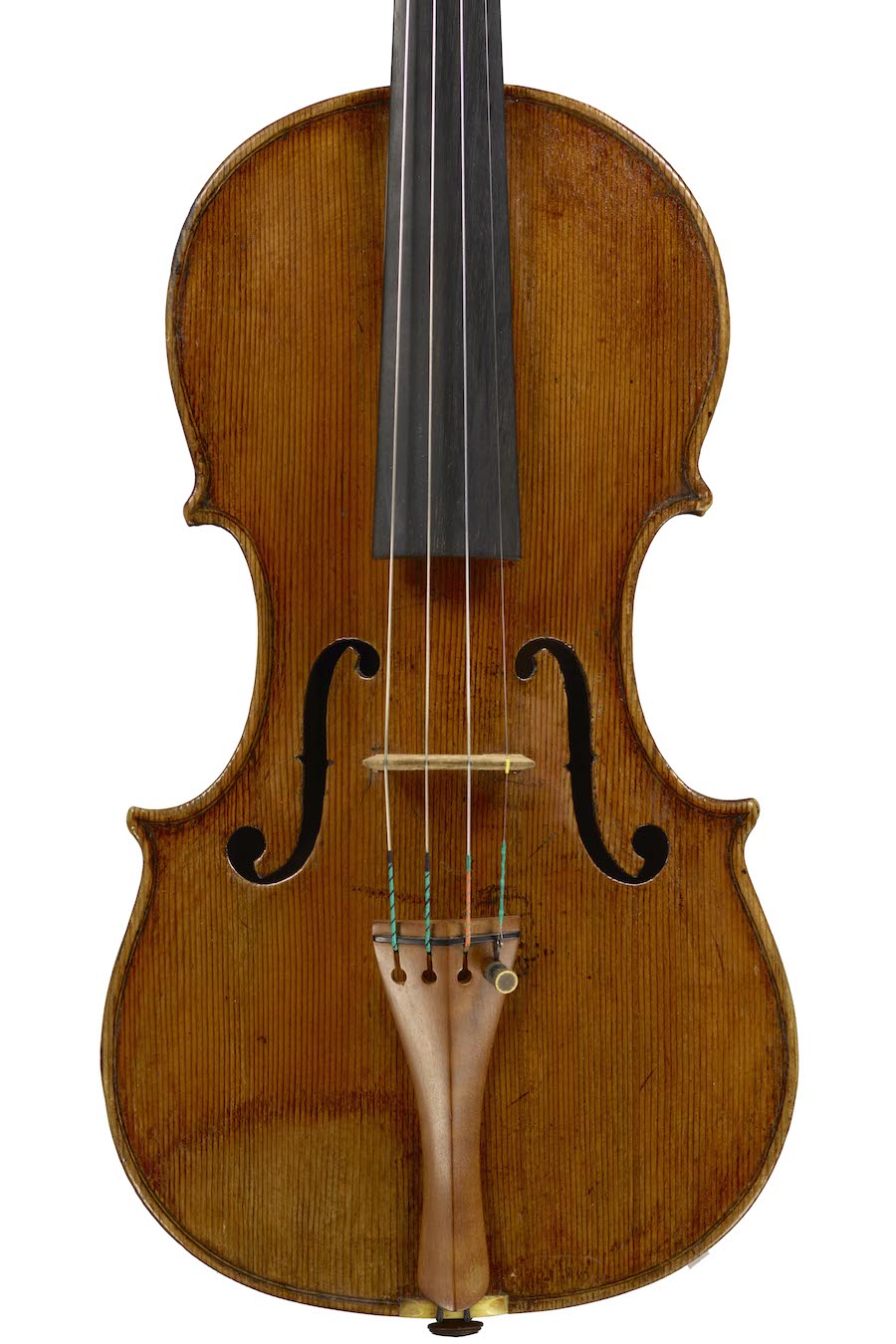
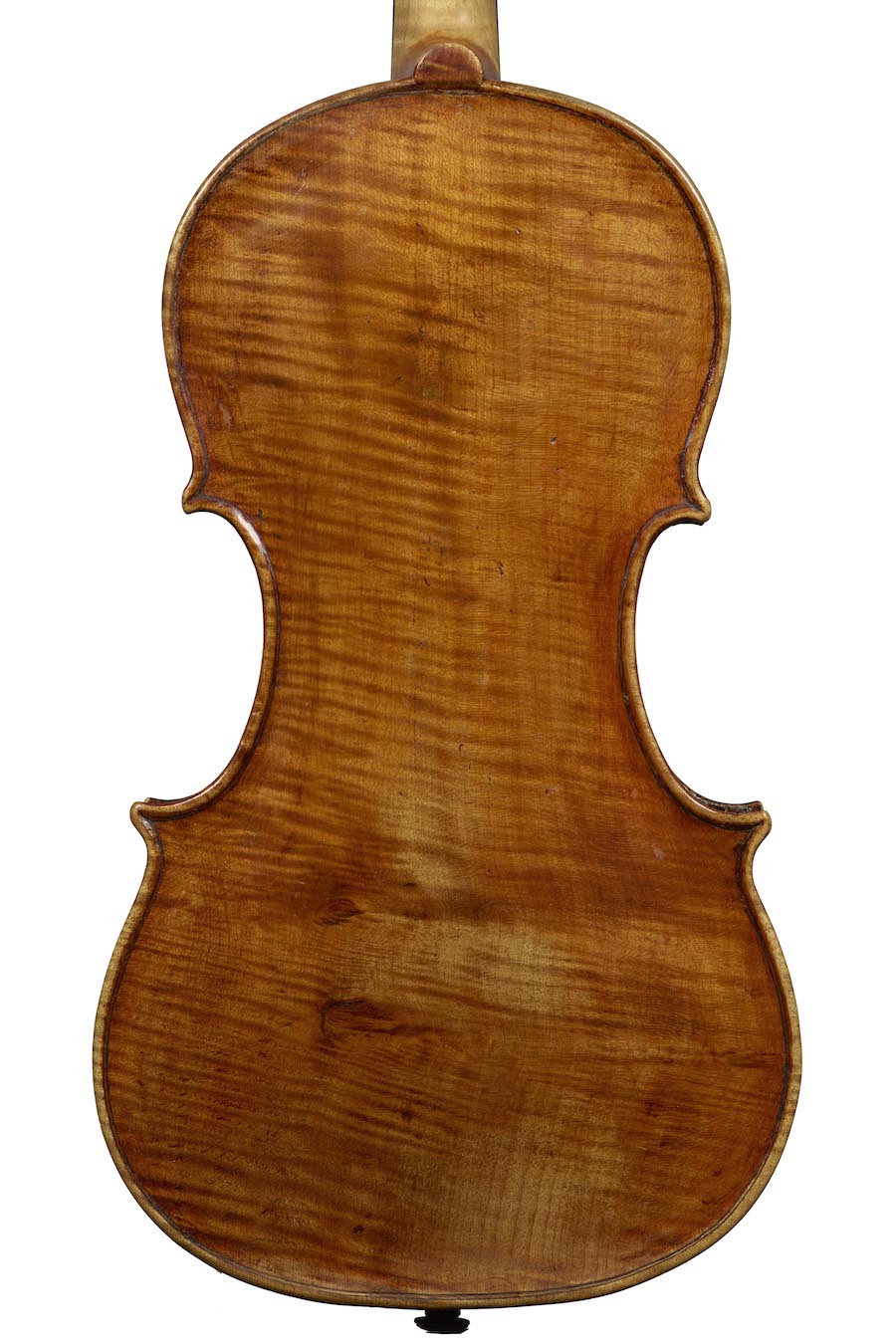
Antonio Zanotti was born in 1695 in Abbadia Cerreto, near Lodi, in a community devoted to agriculture and he moved together with his family to the main city at the beginning of the eighteenth century. In his labels Zanotti claimed to have been a pupil of Girolamo Amati II; we do not know if this apprenticeship actually took place, nor where, given that Nicolò Amati's son spent several years outside Cremona because of financial problems. Some documents seem to suggest a stay in Piacenza, the circumstances of which it have not been possible to determine with certainty so far. In any case, Zanotti resurfaced again as an adult residing in Mantua, where he arrived in the 1720s. A few years later, in 1731, he entered into a partnership with Camillo Camilli, a younger but probably more skillful maker, although their cooperation was short-lived due to Zanotti's untimely death in 1734.
His work is little known and, if it was influenced by Amati, it was to a quite superficial extent. His models are slender and elegant, with minute corners; the materials are usually quite simple, the maple often with little figure and the spruce with heavy summer grains. The F-holes are also loosely inspired by Amati, but their stems tend to remain rather wide in their final parts.